
Omsk State Medical University – MBBS Education in Russia for Indian Students
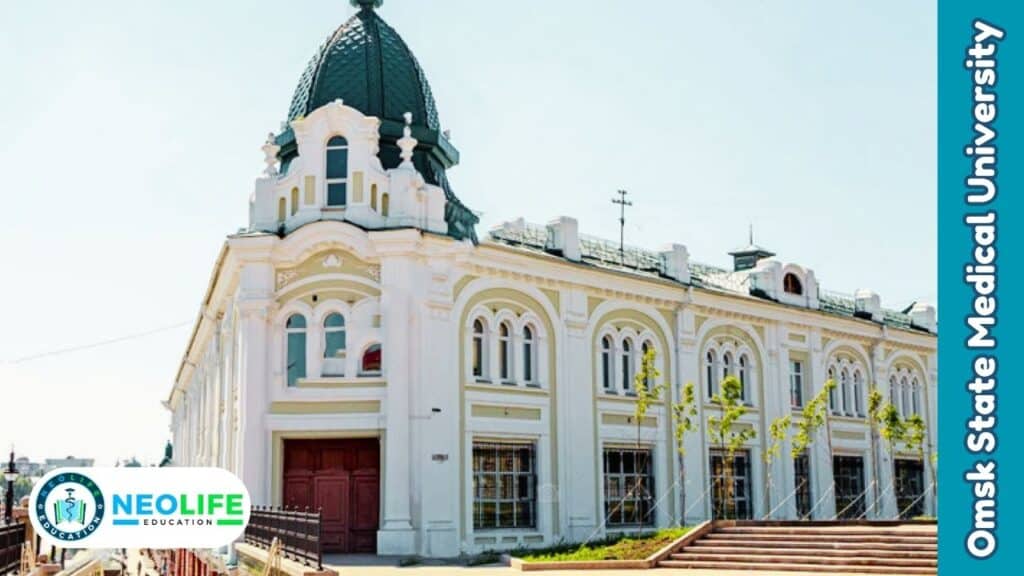
Every year, more than a million Indian students appear for NEET with one singular ambition: to become a doctor. Yet the brutal arithmetic of Indian medical admissions means that government MBBS seats satisfy only a fraction of this demand, and private medical college fees in India — frequently ranging from ₹60 lakh to ₹1.5 crore for the complete programme — place quality medical education beyond the financial reach of most Indian families. It is in this landscape that MBBS education in Russia has emerged as not just an alternative, but a genuine first choice for NEET-qualified students who refuse to let economics determine whether they become doctors. And among all the Russia medical colleges serving Indian students today, Omsk State Medical University stands in a class of its own.
Omsk State Medical University — known as OSMU or Omsk State Medical Academy — is one of the oldest, largest, and most comprehensively recognised Russia medical colleges in Siberia. Founded in 1920 as the Medical Faculty of the Siberian Institute of Veterinary Medicine and Zoology, and progressively elevated through decades of institutional growth to its current status as a full state medical university (designated in 2015), OSMU carries over a century of medical education tradition into every lecture hall, laboratory, and hospital ward where its students train today. The university has produced more than 35,000 doctors who now serve patients in every region of Russia and across the globe. With 5,500+ students from multiple countries — including a vibrant Indian student community exceeding 600 — 1,000+ highly decorated academic staff, 6 dedicated faculties, 35 affiliated hospitals for clinical training, and a library housing 600,000 volumes, OSMU is not merely a medical university. It is Siberia’s premier centre of medical education, research, and clinical excellence.
For Indian students specifically, OSMU presents a combination of institutional advantages that is genuinely difficult to match: full NMC recognition and WHO listing, complete English-medium instruction, annual tuition fees of RUB 3,30,000, a hostel fee of just RUB 20,000 per year, Indian food in the hostel mess, 35 affiliated hospitals for real-world clinical training, active FMGE preparation support from the undergraduate years, and a growing, connected Indian student community that ensures no student ever navigates their MBBS journey alone. This comprehensive guide covers every aspect of MBBS in Russia at Omsk State Medical University that Indian students and families need to make a fully informed, confident decision.
Omsk State Medical University – Key Facts at a Glance
| Detail | Information |
|---|---|
| Official Name | Omsk State Medical University (OSMU) |
| Also Known As | Omsk State Medical Academy | Omsk Medical University |
| Established | 1920 (as Medical Faculty of Siberian Institute) |
| Designated University | 2015 (formerly State Medical Academy from 1994) |
| Type | Public Government University – Russian Federation |
| Location | Omsk, Omsk Oblast, Western Siberia, Russia |
| Governing Body | Ministry of Health of the Russian Federation |
| Faculties | 6 – General Medicine, Pediatrics, Preventive Medicine, Dentistry, Pharmacy, OSMU College |
| Departments | 35+ clinical departments across all medical disciplines |
| Faculty Staff | 1,000+ academic staff (many holding ‘Excellence in Health’ & ‘Honored Doctor’ awards) |
| Total Students | 5,500+ (from multiple countries including 600+ Indian students) |
| Affiliated Hospitals | 35 key hospitals across Omsk with full clinical training access |
| Library | 600,000+ volumes including 262 periodicals in multiple languages |
| Graduates Produced | 35,000+ doctors trained over the university’s history |
| MBBS Duration | 6 Years (5 academic years + 1 mandatory internship) |
| Degree Awarded | MD / General Medicine (MBBS equivalent) |
| Medium of Instruction | English (full programme for international students) |
| Annual Tuition Fee | RUB 3,30,000 per year |
| Annual Hostel Fee | RUB 20,000 per year |
| Recognition | NMC (India), WHO, ECFMG, FAIMER, WDOMS, Russian Ministry of Health & Education |
| National Ranking | Consistently in Top 100 Universities in Russia | 203rd–237th by various platforms |
| International Ranking | World ranking 3,558–6,109 (uniRank, EduRank 2025) |
| International Memberships | IFMSA member since 1997 | IADS member since 2007 |
| Global Partnerships | 100+ universities – USA, Japan, Western Europe, Germany (DAAD) |
| Intake | September |
| Official Website | omsk-osma.ru/en |
Why Choose Omsk State Medical University for MBBS Education in Russia?
Choosing the right Russia medical college is one of the most important decisions a medical aspirant and their family will ever make. The right institution can launch a distinguished medical career; the wrong one can result in years of wasted time, money, and opportunity. Here is why Omsk State Medical University consistently earns its place at the top of every serious shortlist for MBBS education in Russia.
1. Over a Century of Medical Education – Siberia’s Most Experienced Russia Medical College
Omsk State Medical University was founded in 1920 — making it one of Russia’s oldest continuously operating medical institutions, with over 100 years of uninterrupted medical training experience. This century of institutional development has shaped a depth of faculty expertise, clinical partnership infrastructure, curriculum refinement, and research culture that newer institutions simply cannot replicate. When an Indian student chooses OSMU, they are entering an institution that has spent more than ten decades learning how to produce genuinely competent, globally practice-ready doctors. The university’s evolution — from a faculty of a broader institute in 1920, through designation as a medical institute, then a medical academy in 1994, and finally a full university in 2015 — reflects continuous, recognised growth in both scope and quality.
2. Comprehensive Recognition – NMC, WHO, ECFMG, FAIMER and More
For Indian students, the recognition status of any Russia medical college is the most critical factor in the entire evaluation. Omsk State Medical University is fully recognised by the National Medical Commission (NMC) of India — enabling graduates to appear for FMGE/NExT; the World Health Organization (WHO) — ensuring global academic credibility; ECFMG (USA) — opening the USMLE pathway; FAIMER — one of the most respected international medical accreditation bodies; and WDOMS (World Directory of Medical Schools). The university is also accredited by the Russian Ministry of Education and Science and the Ministry of Health of the Russian Federation. This comprehensive recognition means an OSMU MBBS degree is portable across India, the USA, UK, Australia, Gulf countries, and beyond.
3. Thirty-Five Affiliated Hospitals – Unmatched Clinical Depth for a Russia Medical College
Clinical training quality is where most Russia medical colleges are differentiated from each other — and where OSMU stands apart. The university maintains clinical departments at 35 key hospitals across Omsk, each serving as a professional training site for OSMU students. These hospitals are not token affiliations — they are fully operational clinical institutions where OSMU professors work as consultant specialists, supervising students in real diagnostic and treatment contexts. Hospital facilities are specialised across oncology, infectious diseases, sexually transmitted diseases, tuberculosis, dermatology, reproductive health, and general medicine. From Year 3 onwards, OSMU students are embedded in these hospitals — interacting with real patients, developing genuine clinical judgment, and building the kind of practical competence that directly translates to FMGE/NExT success.
4. Clinical Skills Centre – Simulation Before the Wards
Before OSMU students encounter real patients in hospital settings, they train in the university’s Clinical Skills Centre — a dedicated simulation and assessment facility that recruits and trains standardised patients (SPs) for both instructional exercises and formal clinical assessments. The centre provides simulation-based training in clinical examination, patient history-taking, procedural skills, and clinical reasoning. It also hosts Graduate Medical Education and Continuing Medical Education programmes in specific clinical research and assessment initiatives. This structured simulation experience means that when OSMU students first enter clinical wards in Year 3, they bring a level of preparation that significantly reduces both anxiety and error — and that directly builds the applied clinical competence tested in FMGE/NExT.
5. Library of 600,000 Volumes – One of Siberia’s Largest Medical Libraries
Academic self-directed study and research are inseparable from quality medical education, and OSMU’s library is one of the most impressive in the entire Siberian region. The library holds approximately 600,000 volumes — including periodicals, electronic editions, medical texts in Russian and foreign languages (English, German, Latin, French), natural science references, social science materials, and belle-lettres. The library receives 262 periodicals annually, 150 of which are in the medical sphere. An electronic reading hall provides digital access to databases and e-publications. More than 100 book exhibitions and literary events are organised annually. For Indian students preparing for FMGE/NExT, the library’s resources — particularly its English-language medical collection and electronic databases — provide a comprehensive self-study environment that complements classroom teaching throughout the six-year programme.
6. Internationally Active Research University with 100+ Global Partnerships
OSMU is not simply a teaching institution — it is an active research university with genuine international scientific engagement. The university has established ties with 100+ universities across the USA, Japan, and Western Europe, and has been an IFMSA (International Federation of Medical Students’ Associations) member since 1997 and an IADS (International Association of Dental Students) member since 2007. Students participate in international exchange internships at leading foreign clinics annually. OSMU has won DAAD (German Academic Exchange Service) scholarships, sending student groups to leading German clinics including Charité in Berlin and university clinics in Bonn, Dusseldorf, and Bochum. The university’s 8 research committees and 4 scientific councils coordinate research across major clinical and biomedical domains. This international research culture enriches the academic environment for all OSMU students, exposing them to global best practices in medical science.
7. Six Hundred-Plus Indian Students – A Community That Supports Your Success
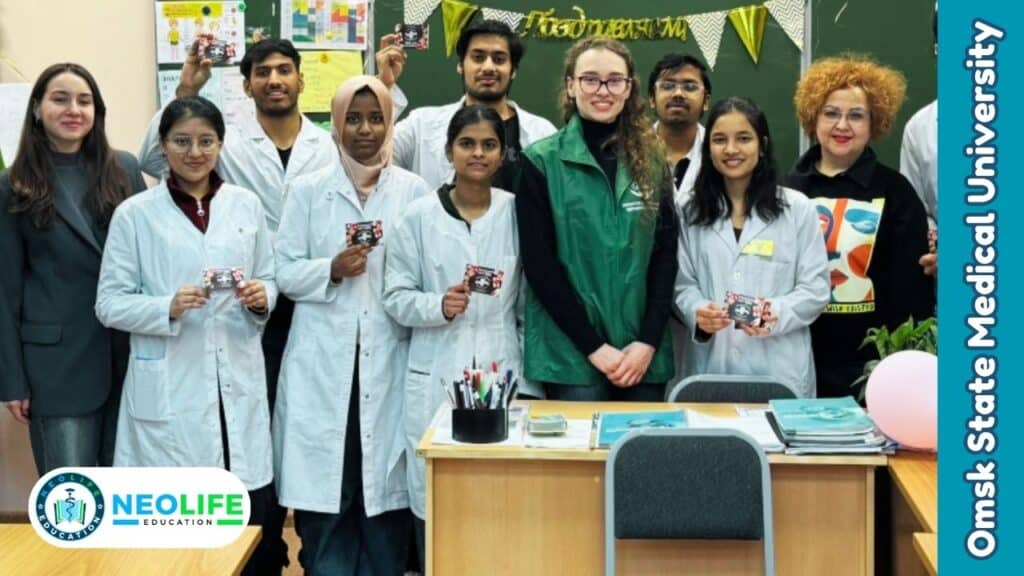
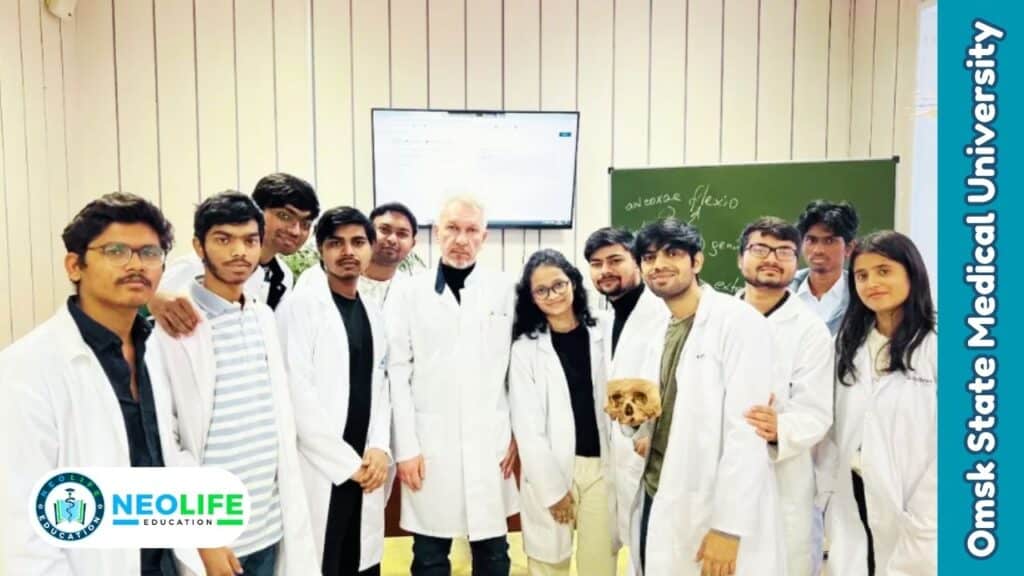
For Indian students, arriving at a foreign university in a distant country is not only an academic challenge but an emotional and social one. OSMU’s Indian student community of 600+ across all years of the MBBS programme provides a ready-made support network that transforms this challenge significantly. Indian students at OSMU share accommodation in dedicated hostel spaces, access Indian food in the hostel mess, celebrate Diwali, Holi, Independence Day, and other festivals together, maintain active FMGE study networks, and provide mentoring for newly arriving first-year students. This community is not an informal gathering — it is a structured, active, culturally vibrant network that ensures every Indian student at OSMU has the peer support they need to thrive academically and personally.
Omsk State Medical University Fees – Complete Structure for Indian Students 2025-26
When Indian families begin researching MBBS education in Russia, the fee structure is always the first priority. At Omsk State Medical University, the fees are transparent, fixed, and genuinely affordable — with no capitation charges and no hidden costs at any stage of admission or enrolment.
Annual Tuition and Hostel Fees at Omsk State Medical University
| Fee Component | Annual Amount (RUB) | Indicative INR* |
|---|---|---|
| Tuition Fee – MBBS / General Medicine | RUB 3,30,000 | ~₹3.30 Lakhs |
| Hostel / Dormitory Fee | RUB 20,000 | ~₹20,000 |
| Total Annual Cost (Tuition + Hostel) | RUB 3,50,000 | ~₹3.50 Lakhs |
*INR equivalents are indicative only, based on approximate exchange rates. Actual INR amounts will vary with the prevailing RUB–INR exchange rate at time of payment. Students should verify current rates with their bank or forex provider before financial planning.
Year-Wise 6-Year Total Fee Projection – MBBS at Omsk State Medical University
| Academic Year | Tuition (RUB) | Hostel (RUB) | Annual Total (RUB) | Cumulative Total (RUB) |
|---|---|---|---|---|
| Year 1 | 3,30,000 | 20,000 | 3,50,000 | 3,50,000 |
| Year 2 | 3,30,000 | 20,000 | 3,50,000 | 7,00,000 |
| Year 3 | 3,30,000 | 20,000 | 3,50,000 | 10,50,000 |
| Year 4 | 3,30,000 | 20,000 | 3,50,000 | 14,00,000 |
| Year 5 | 3,30,000 | 20,000 | 3,50,000 | 17,50,000 |
| Year 6 | 3,30,000 | 20,000 | 3,50,000 | 21,00,000 |
| 6-YEAR TOTAL | 19,80,000 | 1,20,000 | 21,00,000 | 21,00,000 |
No donation. No capitation. No hidden administrative charges. The fees at Omsk State Medical University are among the most competitive offered by any NMC-recognised Russia medical college. The total 6-year investment of RUB 21,00,000 — including hostel — is a fraction of what Indian private medical colleges charge for the same qualification, making OSMU one of the clearest financial propositions in MBBS education in Russia today.
Additional Monthly Living Expenses to Budget For
Beyond official tuition and hostel fees, Indian students at Omsk State Medical University should budget for the following estimated additional monthly and annual costs:
- Food and groceries: RUB 8,000 – 15,000 per month (Indian food available in hostel mess; self-cooking permitted in hostel kitchens; Indian grocery items available at local markets)
- Personal expenses, local transport, and leisure: RUB 3,000 – 7,000 per month (Omsk is an affordable Siberian city with low living costs)
- Medical insurance (mandatory for Russian student visa): RUB 4,000 – 7,000 per year
- Study materials, textbooks, stationery: RUB 4,000 – 6,000 per year
- One-time visa and immigration documentation fees: approximately RUB 8,000 – 12,000
- Return airfare India–Omsk (via Moscow, direct or connecting): approximately ₹25,000 – ₹55,000 per trip
The overall cost of living in Omsk is significantly lower than major Russian cities like Moscow or St. Petersburg. Students can expect to manage total monthly living expenses in the range of approximately USD 120–200 per month excluding hostel — making Omsk one of the most cost-effective locations for MBBS education in Russia.
MBBS Programme at Omsk State Medical University – Structure and Curriculum
The MBBS (General Medicine) programme at Omsk State Medical University is a 6-year full-time integrated course — 5 years of academic and clinical study followed by 1 year of mandatory clinical internship. The International Education Division at OSMU delivers the complete programme in English for Indian and other international students, with structured Medical Russian language training included from Year 1 to facilitate patient communication during hospital rotations.
The university curriculum at OSMU is specifically designed to allow diversity and integration — ensuring students with different learning styles, strengths, and career aspirations can find their best pathway through medical education. The curriculum supports research-oriented students, community medicine specialists, clinical specialists, and generalist physicians equally. The fundamental objective is to produce not merely examination-passing graduates, but genuinely competent doctors who can navigate the full complexity of real-world clinical practice from their first day of independent work.
Year-Wise MBBS Curriculum at Omsk State Medical University
| Year | Core Subjects and Training Focus |
|---|---|
| Year 1 | Human Anatomy, Medical Biology, Histology & Embryology, Biochemistry, Medical Latin, Medical Russian Language (Foundation), Physical Education |
| Year 2 | Normal Physiology, Advanced Biochemistry, Microbiology & Virology, Pathological Anatomy, Introduction to Clinical Medicine, Medical Russian (Intermediate) |
| Year 3 | Pathophysiology, Pharmacology, Propedeutics of Internal Diseases, Propedeutics of Surgery, Hygiene & Epidemiology, Medical Russian (Clinical) – Hospital placements begin at 35 affiliated hospitals |
| Year 4 | Internal Medicine, General Surgery, Obstetrics & Gynaecology, Neurology, ENT Diseases, Ophthalmology, Psychiatry, Dermatovenereology – Intensive hospital rotations |
| Year 5 | Advanced Clinical Rotations – Internal Medicine, Surgery, Paediatrics, Infectious Diseases, Oncology, Emergency & Critical Care Medicine, Forensic Medicine, Polyclinic Medicine |
| Year 6 | Advanced Polyclinic Therapy, Polyclinic Surgery, Social Hygiene, Medical Rehabilitation, Anaesthesiology, Elective Specialties, State Final Examination (OSCE + Written papers) |
OSMU’s curriculum is designed with two parallel objectives: meeting the Russian federal standards for medical graduation, and preparing Indian students specifically for the FMGE/NExT licensing examination they will need to clear to practise in India. The subject coverage across all six years maps directly to FMGE/NExT examination domains. The university has updated its curriculum continuously to align with the latest NMC guidelines and the evolving requirements of international medical licensing, ensuring that OSMU graduates are not simply qualified — they are examination-ready.
Recognition and Accreditation – Omsk State Medical University
For Indian students, the recognition status of any Russia medical college is the most important factor in evaluating whether years of study and family investment will result in a valid, usable medical degree. Omsk State Medical University holds one of the most comprehensive recognition portfolios of any Russia medical college:
| Regulatory / Accreditation Body | Recognition Status |
|---|---|
| National Medical Commission (NMC), India | ✅ Fully Recognised – FMGE/NExT eligible |
| World Health Organization (WHO) | ✅ Listed in World Directory of Medical Schools (WDOMS) |
| Ministry of Health, Russian Federation | ✅ State-Accredited Medical University |
| Ministry of Education and Science, Russia | ✅ Fully State-Accredited – Degree legally valid |
| ECFMG (Educational Commission for Foreign Medical Graduates, USA) | ✅ Recognised – USMLE pathway available |
| FAIMER (Foundation for Advancement of International Medical Education) | ✅ Listed and Recognised |
| WDOMS (World Directory of Medical Schools) | ✅ Listed |
| IFMSA (International Federation of Medical Students’ Associations) | ✅ Full member since 1997 |
| IADS (International Association of Dental Students) | ✅ Member since 2007 |
| Gulf Medical Councils (UAE, Saudi Arabia, Qatar, Bahrain) | ✅ Degree accepted subject to local licensing |
| General Medical Council (GMC), UK – PLAB pathway | ✅ Eligible |
This eleven-body recognition profile makes Omsk State Medical University one of the most comprehensively accredited Russia medical colleges available to Indian students. Graduates can pursue FMGE/NExT for India, USMLE for USA, PLAB for UK, AMC for Australia, or Gulf licensing examinations — making an OSMU degree one of the most globally mobile medical qualifications earned through MBBS education in Russia.
Omsk City – Location, Safety, and Life for Indian Students
Choosing a Russia medical college means choosing a city to live in for six years. Omsk is a city that consistently earns high satisfaction ratings from its international student population — offering a combination of urban amenities, safety, affordability, and cultural richness that makes it one of the most student-friendly cities in Siberian Russia.
Where is Omsk? – Location Overview
Omsk is one of the largest cities in Russia and the administrative centre of Omsk Oblast, located in south-western Siberia at the confluence of the Irtysh and Om rivers. With a population of approximately 1.1–1.2 million residents, Omsk is a substantial Russian metropolis — large enough to have all the amenities of a modern city including international supermarkets, shopping centres, restaurants serving diverse cuisines, hospitals, banks, public transport, airports, and an active cultural scene, while remaining significantly more affordable than Moscow or St. Petersburg. The city has a well-developed industrial and educational base, with multiple higher education institutions making it a genuinely student-oriented city with deep familiarity with and accommodation of the needs of international students.
Safety in Omsk for Indian Students
Safety is the non-negotiable priority for Indian parents evaluating any Russia medical college for their children. Omsk is consistently described by its international student community — including its 600+ Indian students — as a safe, orderly, and welcoming city. The university campus and hostel premises are equipped with 24-hour CCTV surveillance and security personnel. The city’s law enforcement is effective and present, and Omsk’s status as a major industrial and administrative centre means it receives above-average public infrastructure and security investment. Indian students at OSMU — including a notably higher proportion of female students than male, reflecting confidence in the city’s safety — consistently report feeling secure both on campus and in the wider city. The university hostel floors are also separate for male and female students, with appropriate privacy and security protocols.
Climate in Omsk – The Siberian Reality and How OSMU Manages It
Omsk experiences a continental Siberian climate — cold winters and warm summers. Winter temperatures can fall to -20°C to -30°C in the coldest months (December–February), which is the most significant lifestyle adjustment for Indian students from warmer states. However, this is a well-understood and well-managed reality at OSMU. All university buildings, lecture theatres, laboratories, and hostel facilities are equipped with powerful central heating systems supplied by Omsk’s municipal heating infrastructure — maintaining comfortable indoor temperatures regardless of outdoor conditions. Hot water supply is available 24 hours in hostel bathrooms and kitchens. The university advises students on appropriate winter clothing, and the Indian student community provides practical guidance to new arrivals on managing the Siberian winter effectively. Most students adapt within their first season and describe the winter as a manageable, and even enjoyable, aspect of their Omsk experience. Summers in Omsk are warm and pleasant, with temperatures reaching 25–30°C and long daylight hours.
Cost of Living in Omsk
Omsk is one of the most affordable major cities in Russia for students. The city’s cost of living is substantially lower than Moscow, St. Petersburg, Kazan, or any other major Russian university city, with everyday costs — groceries, local transport, dining, and entertainment — priced at levels that are genuinely manageable on a student budget. This affordable cost of living compounds the already low OSMU fees, making the total annual expenditure for an Indian student in Omsk among the lowest of any NMC-recognised Russia medical college city.
Indian Community, Food, and Cultural Life in Omsk
The Indian student community at Omsk State Medical University is one of the most active and well-organised of any Russia medical college. With 600+ Indian students across all six years of the MBBS programme, newly arriving students are welcomed by a ready-made community that provides practical guidance, peer mentoring, study support, and cultural continuity. Indian food is available in the hostel mess — specifically catered for Indian students — eliminating one of the most common concerns of Indian families. Indian grocery items are available at local markets, and many students supplement their hostel meals with home-style cooking in hostel kitchens. The Indian student association at OSMU celebrates Diwali, Holi, Independence Day, Republic Day, and other major Indian festivals with enthusiasm — keeping students culturally connected and emotionally grounded throughout their years in Russia.
Campus Infrastructure at Omsk State Medical University
Omsk State Medical University has invested continuously in its academic, clinical, research, and student life infrastructure over more than a century of operation. The result is a campus environment that is fully equipped for comprehensive medical education across all six years of the MBBS programme and beyond.
Academic Buildings and Teaching Facilities
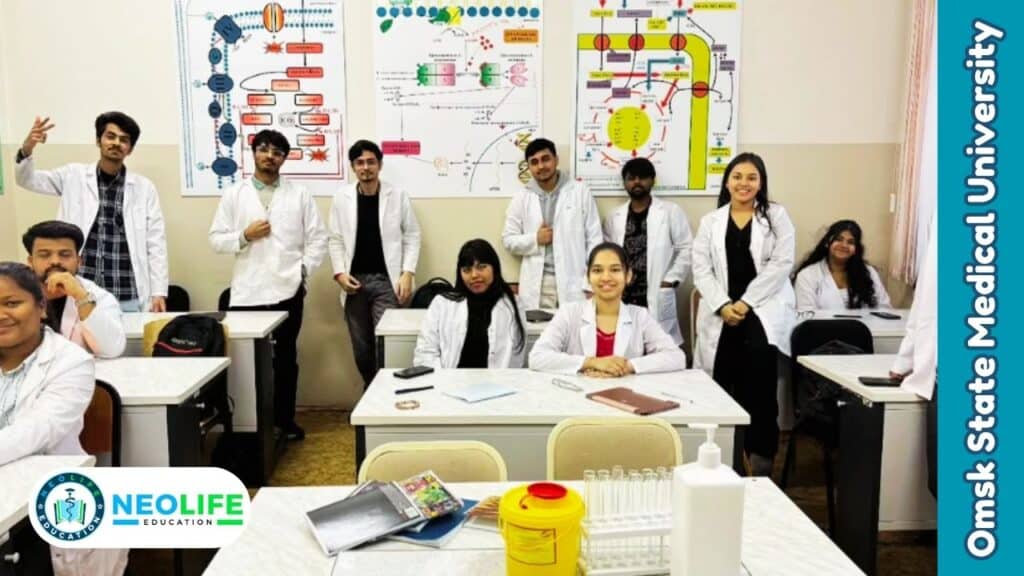
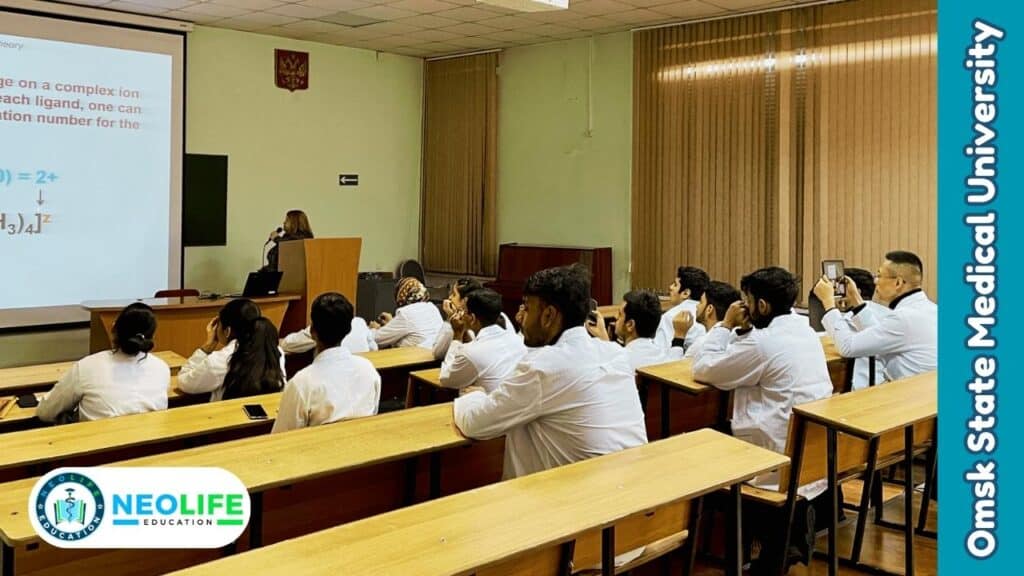
OSMU operates a complex of purpose-built academic buildings designed for practical classes, lectures, laboratory studies, and research work. With 35+ clinical departments and 6 faculties, the university’s physical teaching infrastructure is comprehensive and specialised — dedicated anatomy theatres, physiology laboratories, histology suites, microbiology labs, pharmacology facilities, and pathology departments all operate to appropriate standards with instrumented, well-maintained working spaces. Lecture theatres are equipped with modern audiovisual technology, and small-group seminar rooms support the tutorial-style teaching that is particularly effective in clinical medicine education.
Clinical Skills Centre – Simulation at the Heart of MBBS Training
One of OSMU’s most distinctive educational assets is its Clinical Skills Centre — a fully operational educational and assessment facility that recruits and trains standardised patients (SPs) for clinical skills instruction and examination. The centre’s mission, in OSMU’s own words, is to facilitate a patient-centred medical curriculum through sound educational activities. Simulation-based learning modules cover patient history-taking, physical examination, procedural skills, clinical reasoning under pressure, and structured clinical assessments (OSCEs). Simulation robots and high-fidelity mannequins supplement SP-based training for procedural simulation. This pre-hospital simulation experience directly reduces the anxiety and error rates of students in their first clinical placements from Year 3 and builds examination confidence that translates into FMGE/NExT performance.
Thirty-Five Affiliated Hospitals – Clinical Backbone of OSMU’s MBBS Education
The most extraordinary physical asset of Omsk State Medical University’s clinical infrastructure is its network of 35 key hospitals across Omsk, at which OSMU clinical departments are based. These hospitals are not passive affiliations — OSMU professors are active clinical specialists at these institutions, simultaneously providing patient care and supervising student training. Students from Year 3 onwards are placed across these hospitals in rotating clinical attachments that progressively increase in complexity and clinical responsibility. The diversity of clinical presentations across 35 hospitals — ranging from general medicine and surgery to oncology, reproductive health, infectious diseases, and emergency care — ensures that OSMU MBBS graduates have genuine breadth of clinical experience by the time they graduate. This clinical network is, quite simply, one of the strongest in any Russia medical college.
Library – 600,000 Volumes Including 150 Medical Periodicals
OSMU’s library is one of the most impressive academic resources of any Russia medical college. With 600,000 volumes covering medicine, natural sciences, social sciences, and humanities — in Russian, English, German, Latin, and French — and 262 periodicals including 150 medical journals received annually, the library provides a research and study resource of genuine depth. The electronic reading hall provides digital access to medical databases and online academic resources. The library organises over 100 book exhibitions and educational events annually. For Indian students preparing for FMGE/NExT, the library’s English-language medical collection and digital database access provide a comprehensive self-study environment that is available throughout the six-year programme.
Sports, Gym, and Recreational Facilities
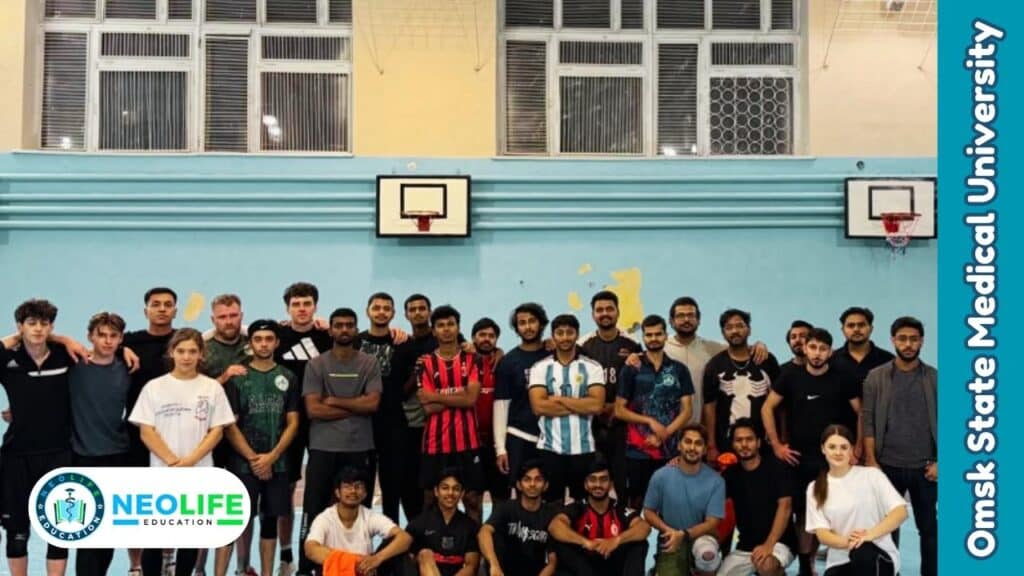
Physical and mental wellbeing are actively promoted at OSMU. The campus is equipped with well-resourced gyms, sports centres, ski centres, and both indoor and outdoor sports complexes. Sports competitions — including cricket, football, basketball, badminton, and tennis — are organised regularly, with opportunities for inter-university and regional competition. Cultural groups, creative events, and student clubs provide non-athletic extracurricular engagement. OSMU explicitly encourages holistic student development through creative and athletic programming, and these facilities are available to all international students including Indian students at the same access level as domestic students.
Hostel and Accommodation at Omsk State Medical University
Accommodation quality is one of the first concerns Indian families raise when a student prepares to study MBBS at any Russia medical college. At Omsk State Medical University, the hostel infrastructure is well-maintained, secure, and structured to meet the specific needs of international students — including Indian students.
OSMU Hostel – Features and Amenities
- Annual hostel fee: RUB 20,000 — among the lowest of any NMC-recognised Russia medical college
- Three dormitory buildings with combined capacity for approximately 1,344–1,400 students
- Room types: rooms for 2–3 students sharing, fully furnished with beds, mattresses, chairs, desks, wardrobes, TVs, and kitchen cupboards
- Separate hostel floors for male and female students with appropriate privacy and security protocols
- Attached bathroom facilities with shower units on each floor
- Central heating throughout all hostel buildings with 24-hour hot water supply
- CCTV cameras operating 24 hours across all hostel premises; campus security personnel present
- Wi-Fi internet connectivity in all hostel buildings
- Common kitchen facilities on each floor for self-cooking including Indian food preparation
- Hostel mess serving Indian food specifically catered for Indian students
- Common rooms for sports, self-study preparation, group study, and social activities
- Well-equipped on-site gym and sports facilities accessible to hostel residents
- Canteen serving diverse cuisine options including Indian dishes
- Regular sanitation and housekeeping maintaining hygiene standards
The three hostel dormitories at OSMU are consistently described by Indian students as comfortable, safe, and well-managed. The combination of attached bathrooms, central heating, CCTV security, dedicated Indian food in the mess, hostel kitchen facilities, and a low annual hostel fee of just RUB 20,000 makes OSMU’s accommodation offering one of the strongest value propositions of any Russia medical college for Indian students.
Admission Process – MBBS at Omsk State Medical University for Indian Students
The admission process at Omsk State Medical University is designed to be transparent and accessible for Indian students. Admission is merit-based, with eligibility assessed on academic qualifications and NEET score. The process from application to arrival in Omsk takes approximately 10–14 weeks when managed efficiently.
Eligibility Criteria for MBBS at Omsk State Medical University
- Age: Minimum 17 years and maximum 25 years as of 31st December of the admission year
- Academic Qualification: Completion of 10+2 (Class XII) with Physics, Chemistry, Biology, and English as core subjects
- Minimum Marks: 50% aggregate in PCB for General category; 40% for SC/ST/OBC (as per NMC norms)
- NEET: Valid NEET-UG qualification is mandatory – NEET from 2024, 2025, or 2026 accepted for current cycle
- Medical Fitness: Certificate from a registered medical practitioner confirming fitness for study abroad
- No communicable diseases (HIV negative certificate from certified laboratory required)
- Valid Indian Passport: Minimum 18 months validity from anticipated date of travel
Step-by-Step Admission Process at Omsk State Medical University
| Step | Action | Timeline |
|---|---|---|
| Step 1 | Submit scanned copies of 12th marksheet, NEET qualification, and passport to university or authorised representative | June – September |
| Step 2 | University reviews documents and issues official Admission / Confirmation Letter | Within 3–4 working days |
| Step 3 | Authorised representative applies for Invitation Letter on student’s behalf from the university | 10–14 days after admission letter |
| Step 4 | Student pays first-year tuition and hostel fees; applies for Russian student visa at Russian Embassy or Consulate in India | After Invitation Letter received |
| Step 5 | Currency exchange for RUB (payment on arrival) or online transfer arranged; travel preparations completed | 2–3 weeks before departure |
| Step 6 | Representative meets student at Indian airport; student travels to Omsk in group (supported by representative) | |
| Step 7 | University representative receives students at Omsk airport; transport to hostel provided; documentation completed | September |
| Step 8 | Orientation, migration registration, and commencement of MBBS programme at Omsk State Medical University | September – October |
The complete admission process from document submission to arrival in Omsk typically takes 10–14 weeks. Students applying through official university representatives receive end-to-end support from document preparation through visa processing and airport reception in Omsk. It is strongly recommended to begin the process no later than June to ensure a smooth September intake.
Documents Required for Admission at Omsk State Medical University
- Class 10 (SSC) mark sheet and passing certificate – original and MEA-attested copy
- Class 12 (HSC) mark sheet with PCB subjects – original and MEA-attested copy
- NEET-UG scorecard (2024, 2025, or 2026 qualifying score as per NMC norms)
- Valid Indian passport – original (minimum 18 months validity from travel date)
- Passport-size photographs – 3–4 copies in specified dimensions
- Medical fitness certificate from a registered medical practitioner
- HIV test result (negative) from a certified diagnostic laboratory
- Birth certificate (documentary proof of date of birth)
- Completed and signed admission application form
- Bank statement or financial proof (demonstrating ability to fund education and living costs)
All documents must be properly attested; documents in regional Indian languages must be accompanied by a certified English translation. Students are advised to prepare complete, properly attested document sets well in advance of the September intake to avoid delays in the admission timeline.
FMGE and NExT Preparation – How Omsk State Medical University Prepares Indian Students
The FMGE (Foreign Medical Graduate Examination), transitioning to NExT (National Exit Test), is the mandatory screening all Indian students who complete MBBS at any Russia medical college must pass to practise medicine in India. The national FMGE pass rate across all foreign graduates historically remains below 20% — making preparation quality the most critical distinguishing factor between universities.
Omsk State Medical University’s approach to FMGE preparation is not an add-on service — it is embedded in the structure of the curriculum itself. Indian students at OSMU consistently report strong FMGE preparation outcomes, and this reflects several concrete institutional strengths:
- NMC-aligned English-medium curriculum covering all FMGE/NExT domains: Internal Medicine, Surgery, Obstetrics and Gynaecology, Paediatrics, Preventive Medicine, Psychiatry, ENT, Ophthalmology, Dermatology, and all major specialties
- Clinical Skills Centre simulation training builds applied clinical reasoning and OSCE-style examination confidence from the undergraduate years
- 35 affiliated hospitals providing breadth and depth of clinical exposure that directly strengthens FMGE case-based reasoning performance
- University curriculum is updated continuously in alignment with NMC gazette guidelines and the evolving requirements of FMGE/NExT
- Mandatory 1-year internship post-sixth-year consolidates clinical knowledge and builds the practical confidence that underpins FMGE/NExT examination performance
- 600+ Indian student community at OSMU maintains active peer FMGE study groups, mock examination networks, and online preparation resources
- Faculty includes professors who explicitly prepare students for FMGE from initial years of the course, building examination readiness throughout the programme rather than treating it as a last-minute supplement
Scholarships at Omsk State Medical University for Indian Students
Omsk State Medical University offers multiple scholarship categories that can reduce the financial burden for academically deserving students. The university provides merit-based scholarships for students who demonstrate outstanding academic performance in their semester evaluations, need-based financial assistance for students facing demonstrable financial difficulty, and access to government-funded scholarships through Russian Federation programmes for international students. OSMU also participates in research-linked funding initiatives — including the competitive U.M.N.I.K. programme, in which OSMU’s young scientists are regular participants and winners.
At the federal level, the Russian Government offers scholarships through Rossotrudnichestvo (the Federal Agency for CIS Affairs and International Humanitarian Cooperation), which Indian students can apply for through official Government of India channels in coordination with the Russian Embassy. These scholarships may partially or fully cover tuition fees for qualifying candidates. Students are encouraged to engage with their authorised OSMU representative or the university’s international admissions office early to explore all available scholarship and financial assistance options relevant to their academic profile.
Omsk State Medical University vs Other Options – How It Compares
| Parameter | Omsk State Medical University | Average Russia Medical College | Indian Private MBBS |
|---|---|---|---|
| Established | 1920 (100+ years) | Varies – many post-1950 | Varies |
| National Ranking (Russia) | Top 100 Universities | 203rd–237th | Varies widely | N/A |
| Annual Tuition Fee | RUB 3,30,000 | RUB 3–7 Lakhs | ₹10–25 Lakhs+ |
| Annual Hostel Fee | RUB 20,000 | RUB 25,000–1,00,000 | ₹1–3 Lakhs |
| 6-Year Total (Tuition + Hostel) | RUB 21,00,000 | Varies widely | ₹60–150 Lakhs+ |
| NMC Recognition | ✅ Yes – Confirmed | Varies – verify | ✅ Yes |
| WHO Listing | ✅ Yes – WDOMS listed | Varies | N/A |
| Affiliated Hospitals | 35 hospitals across Omsk | 1–10 typically | 1 teaching hospital |
| Library | 600,000+ volumes | 150 medical journals/year | Varies significantly | Varies |
| Clinical Skills Centre | ✅ Standardised patient & simulation centre | Limited at most | Varies |
| Indian Students | 600+ active community | Varies – often fewer | N/A |
| Indian Food | ✅ Hostel mess with Indian cuisine | Not always available | N/A |
| FMGE Support | Curriculum-embedded from Year 1 | Often minimal | N/A |
| Global Partnerships | 100+ universities globally (USA, Japan, Europe) | Limited | N/A |
| International Memberships | IFMSA, IADS member | Rarely | N/A |
Frequently Asked Questions – MBBS at Omsk State Medical University Russia
Q1. What is Omsk State Medical University?
Omsk State Medical University (OSMU) is one of the oldest, largest, and most respected Russia medical colleges in Siberia, founded in 1920 and designated as a full university in 2015. It is a public government institution governed by the Russian Ministry of Health, with 5,500+ students, 1,000+ faculty, 6 faculties, 35 affiliated hospitals, a 600,000-volume library, and a fully operational Clinical Skills Centre. OSMU is consistently ranked among the top 100 universities in Russia.
Q2. What are the fees at Omsk State Medical University for MBBS?
The annual tuition fee at Omsk State Medical University is RUB 3,30,000 per year. The hostel fee is RUB 20,000 per year. The total 6-year cost including hostel is RUB 21,00,000. No capitation or donation fees are charged at any stage of admission. These fees make OSMU one of the most affordable NMC-recognised Russia medical colleges available.
Q3. Is Omsk State Medical University recognised by NMC India?
Yes. Omsk State Medical University is fully recognised by the National Medical Commission (NMC) of India, the World Health Organization (WHO), ECFMG (USA), FAIMER, and WDOMS. Indian graduates are eligible to appear for FMGE/NExT and practise medicine in India upon qualifying.
Q4. What is MBBS education in Russia like at Omsk State Medical University?
MBBS education in Russia at Omsk State Medical University is a 6-year English-medium programme with clinical training across 35 affiliated hospitals in Omsk from Year 3. The university has a Clinical Skills Centre for simulation training, a library with 600,000+ volumes, modern labs, and an active Indian student community of 600+. The curriculum is specifically aligned with NMC/FMGE requirements.
Q5. Is Omsk State Medical University a good Russia medical college for Indian students?
Yes. OSMU is one of the best Russia medical colleges for Indian students — consistently ranked in Russia’s top 100 universities, with full NMC and WHO recognition, English-medium instruction, 35 hospitals for clinical training, Indian food in the hostel mess, 600+ Indian students, and among the most affordable fee structures available (RUB 3,30,000 tuition + RUB 20,000 hostel annually).
Q6. Is NEET required for MBBS at Omsk State Medical University?
Yes. As per NMC India regulations, all Indian students seeking MBBS education in Russia — including at Omsk State Medical University — must hold a valid NEET-UG qualification (2024, 2025, or 2026 for the current admission cycle) with minimum 50% in PCB for General category.
Q7. Is Omsk safe for Indian students?
Yes. Omsk is a major Siberian city with consistently low crime rates, effective civic order, and a welcoming attitude towards international students. The university campus and hostel premises have 24-hour CCTV and security personnel. The large Indian student community (600+) — including a notably high proportion of female students — reflects genuine confidence in Omsk’s safety environment.
Q8. What hostel facilities are available at Omsk State Medical University?
OSMU provides three hostel dormitories accommodating approximately 1,344–1,400 students at an annual fee of just RUB 20,000. Rooms are for 2–3 students with attached bathrooms, full central heating, 24/7 hot water, CCTV security, Wi-Fi, kitchen facilities for Indian cooking, a hostel mess serving Indian food, gym access, and separate floors for male and female students.
Q9. How many Indian students study at Omsk State Medical University?
Omsk State Medical University has over 600 Indian students enrolled across all years of the MBBS programme — one of the largest Indian student communities at any Russia medical college. This community provides active peer support, FMGE study networks, cultural events, and practical mentoring for newly arriving students.
Q10. What career options are available after MBBS from Omsk State Medical University?
Indian graduates of Omsk State Medical University can appear for FMGE/NExT in India and practise medicine upon qualifying; pursue MD/MS postgraduate studies in India; apply for medical licensure in Gulf countries; pursue USMLE for USA practice; PLAB for UK registration; or AMC for Australia. OSMU’s comprehensive recognition profile — spanning NMC, WHO, ECFMG, FAIMER, and WDOMS — ensures graduates have the widest possible career options globally.
Begin Your Medical Journey – MBBS Education in Russia at Omsk State Medical University
If you are a NEET-qualified Indian student who is serious about becoming a doctor — and is looking for a Russia medical college with over a century of educational excellence, NMC and WHO recognition, 35 affiliated hospitals for unmatched clinical training, a Clinical Skills Centre, a 600,000-volume library, 600+ Indian students, Indian food in the hostel mess, and annual fees of just RUB 3,30,000 for tuition and RUB 20,000 for hostel — Omsk State Medical University is the institution you have been looking for.
The dream of becoming a doctor should not be determined by the number of government seats in India or the fees of private colleges. At Omsk State Medical University, that dream is both credible and affordable — backed by a century of institutional experience, comprehensive global recognition, and the most extensive clinical training infrastructure of any Russia medical college in Siberia.