Indian medical aspirants most preferred destination the Hub of medical education – Philippines making a step forward towards approval of medical registration & easy students Visa process for foreign/Indian students in Philippines
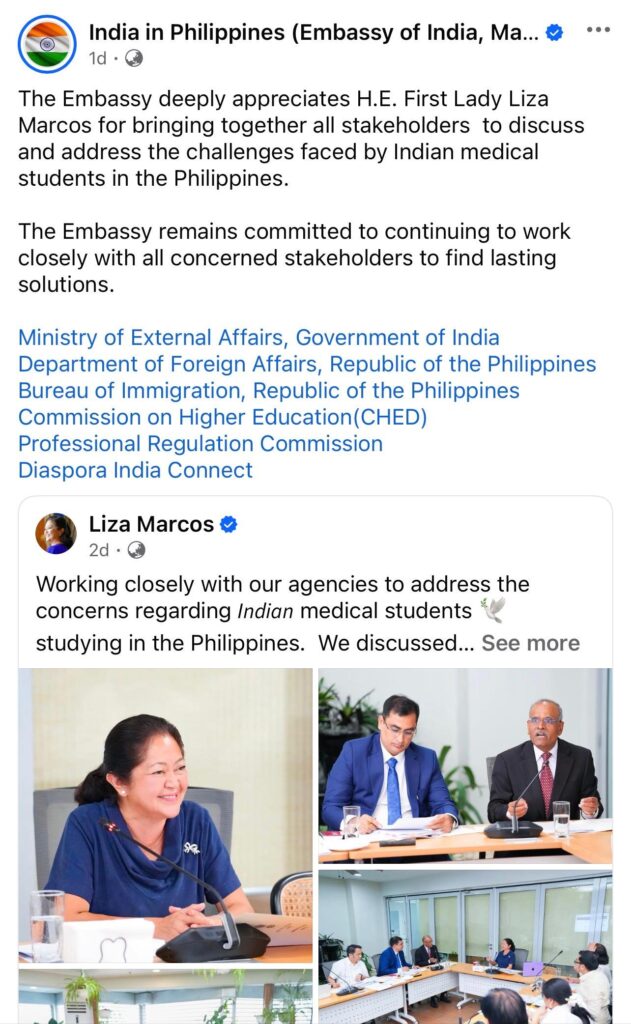
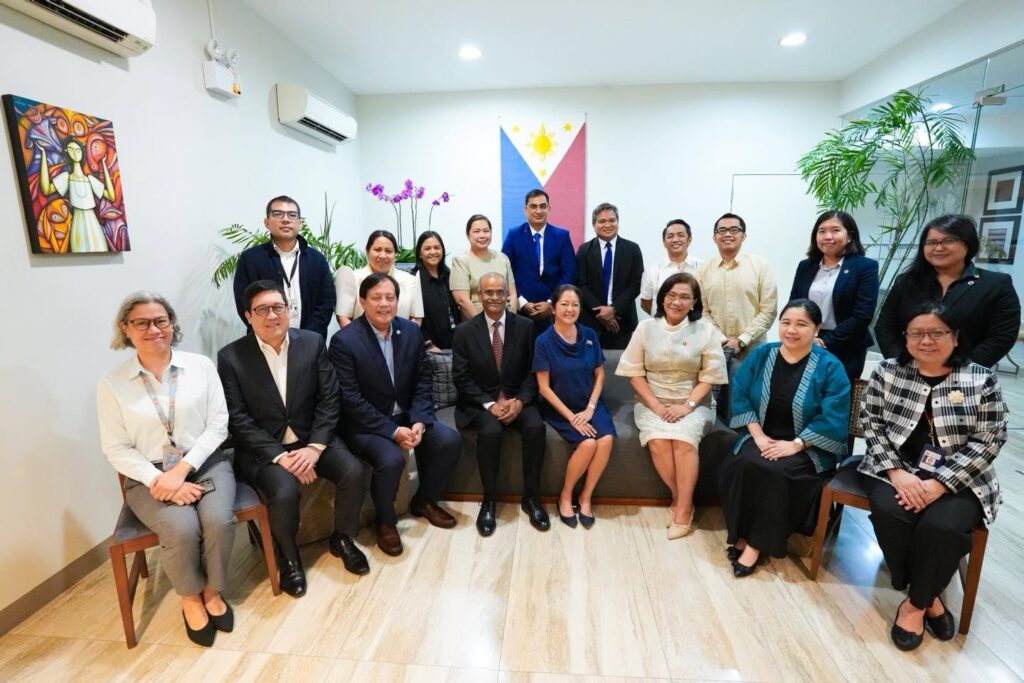
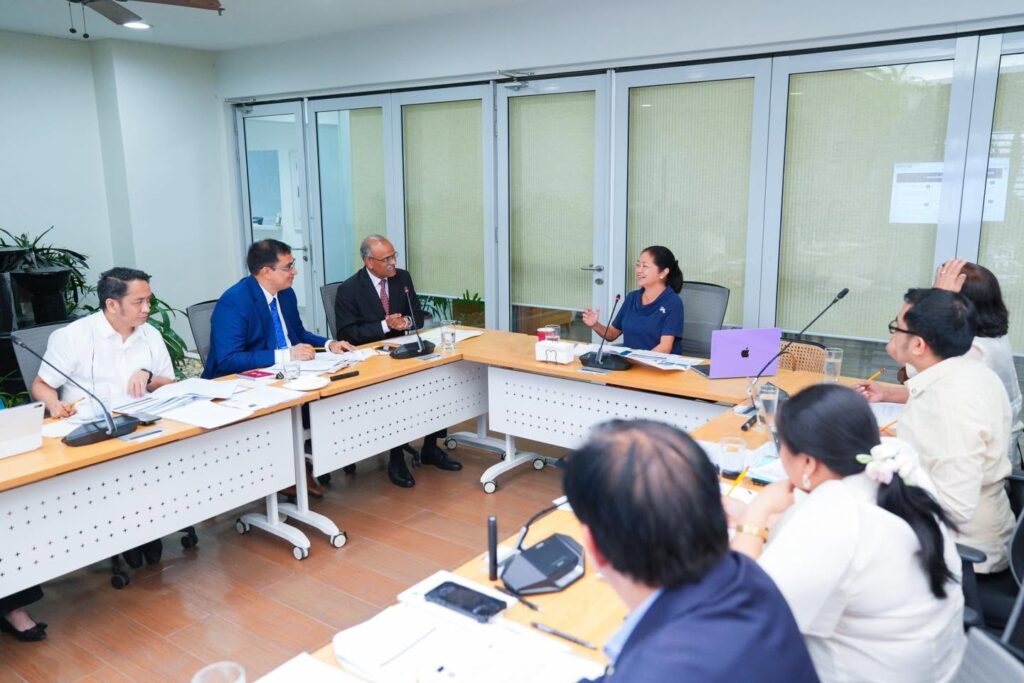
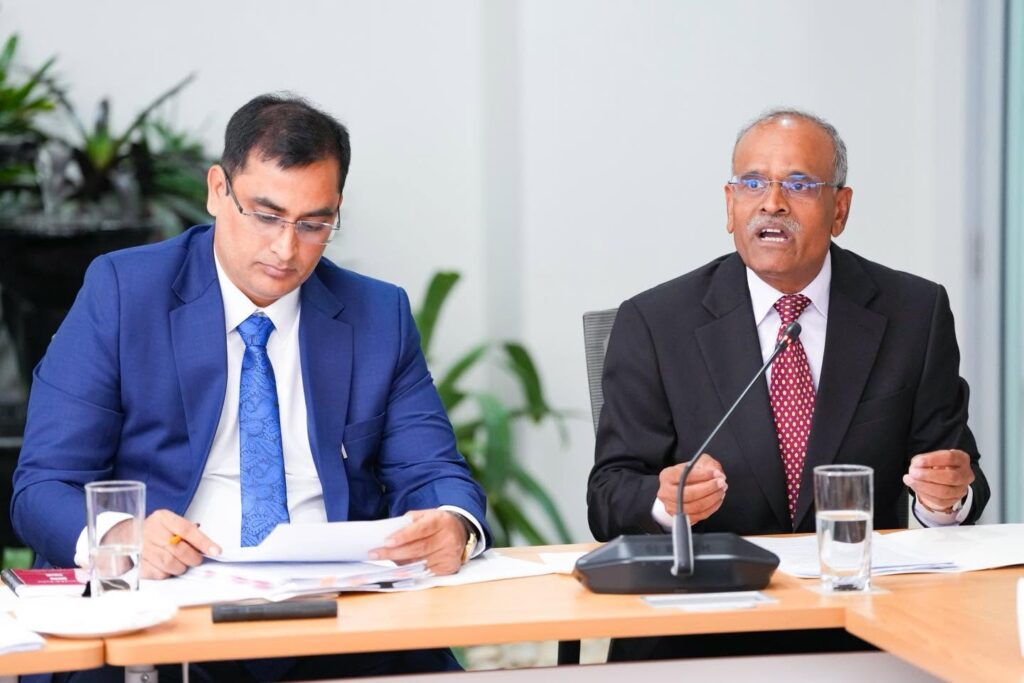
Quick Fact: On June 3, 2026, Philippine First Lady Liza Araneta-Marcos hosted a high-level meeting with Indian Ambassador Harsh Kumar Jain, CHEd Chairperson Shirley Castañeda Agrupis, and Bureau of Immigration Commissioner Joel Anthony Viado to address visa delays and red tape affecting nearly 9,000 Indian medical students in the Philippines. The Indian Embassy publicly thanked the First Lady and confirmed it will keep working with all government stakeholders toward lasting solutions.
Big Relief for Indian MBBS Aspirants: Philippines’ First Lady Personally Steps In to Fix Visa Hassles for 9,000+ Indian Medical Students
If you are an Indian medical aspirant — or a parent, counsellor, or education consultant guiding one — this is the kind of news you have been waiting for. For the first time in years, the issue of visa delays, paperwork bottlenecks, and coordination gaps faced by Indian MBBS students in the Philippines has reached the desk of the country’s First Lady herself. And the message coming out of Malacañang is unambiguous: the Philippines wants to keep its position as a top global destination for Indian medical education, and it is willing to fix the system to do it.
This article breaks down exactly what happened in the June 3 meeting, who was in the room, what it means for current and prospective Indian MBBS students, and what to watch for in the months ahead.
The official Facebook source link: Click Here
What Happened on June 3, 2026: The Meeting Explained
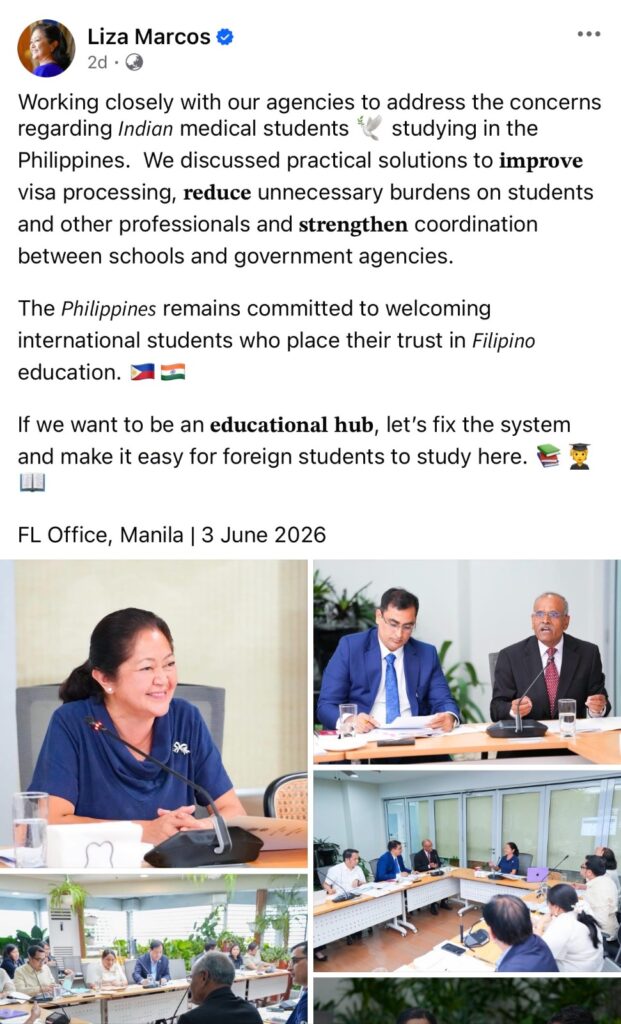
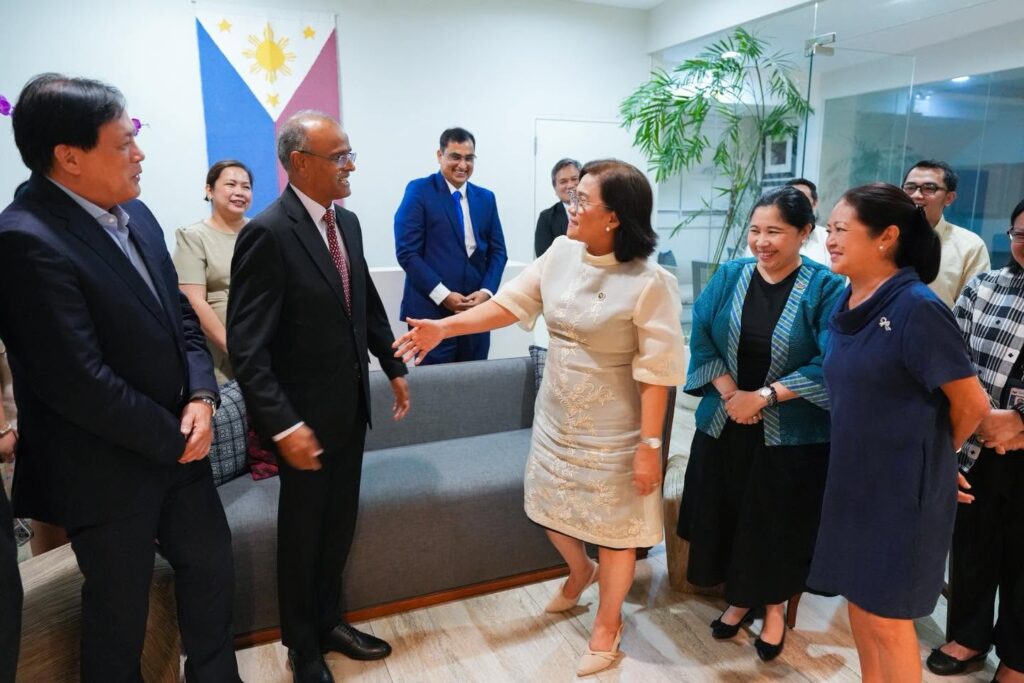
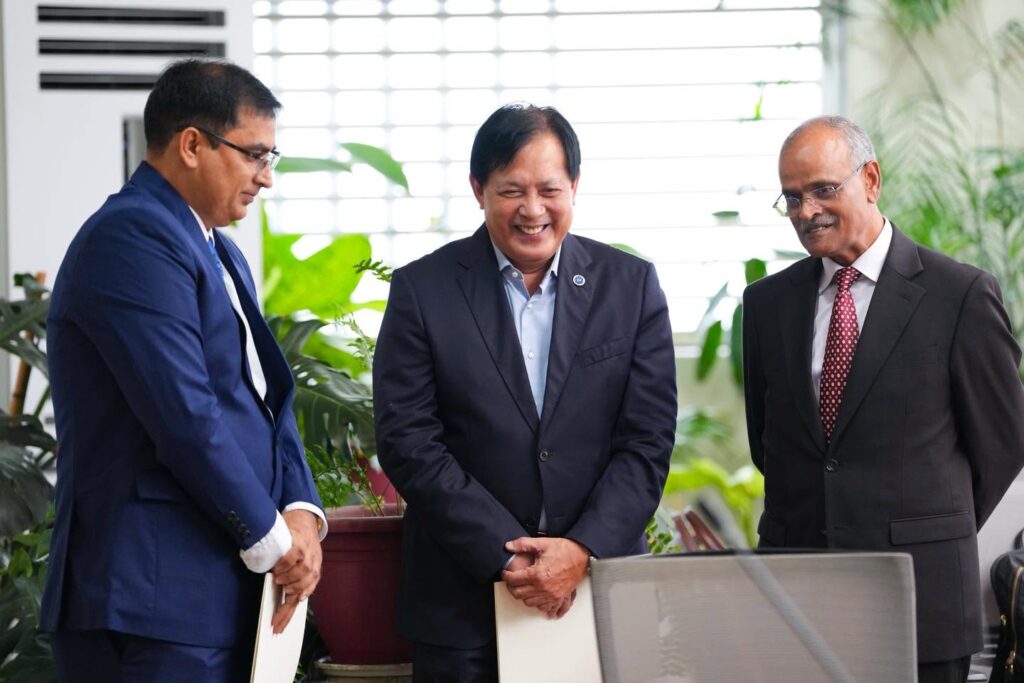
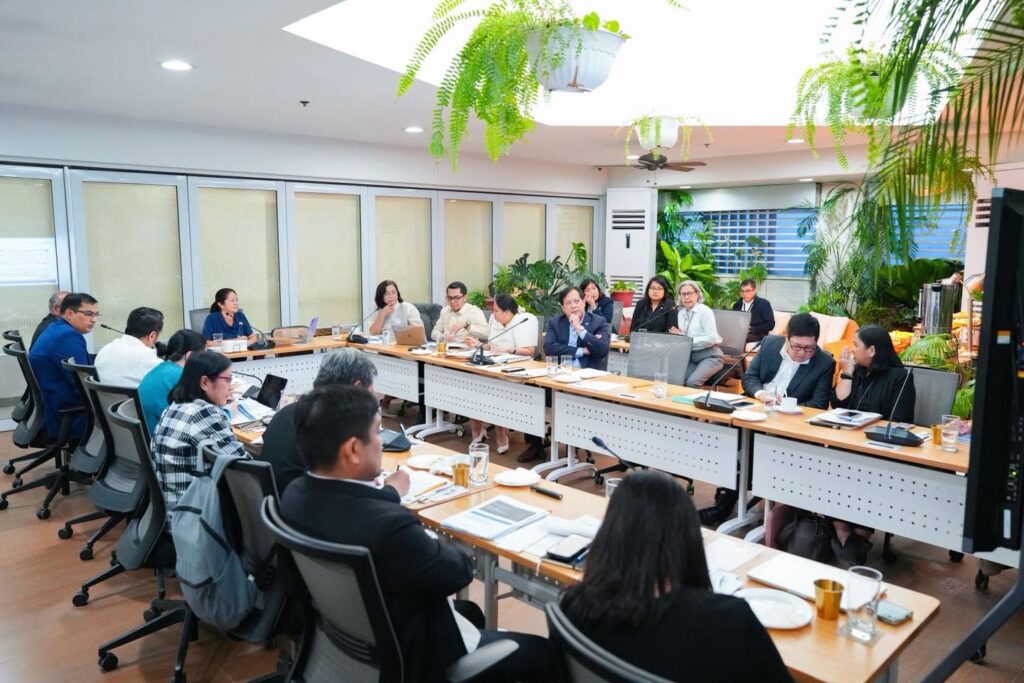
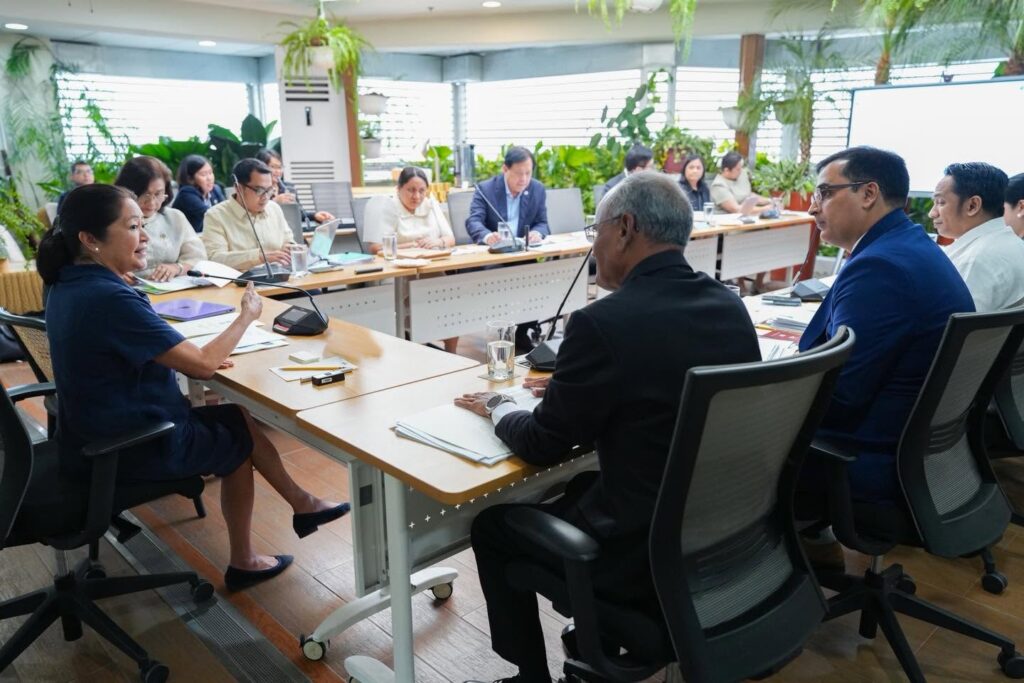
First Lady Liza Araneta-Marcos convened a meeting at the Office of the First Lady in Manila with Indian Ambassador to the Philippines, Harsh Kumar Jain, along with senior representatives from the Philippine government agencies that directly handle foreign student admissions and immigration. The session was called specifically to discuss the practical, on-the-ground concerns raised by Indian medical students currently studying in the country.
According to the First Lady’s own statement, the conversation centered on three practical themes:
- Improving visa processing timelines and predictability
- Reducing unnecessary documentation burdens on students and accompanying professionals
- Strengthening coordination between Philippine medical schools and the government agencies that regulate foreign enrollment
The First Lady framed the broader goal clearly, noting that the Philippines wants to remain a country that welcomes international students who place their trust in Filipino education, and that becoming a true regional education hub means fixing the system so it is easier for foreign students to study there.
Who Attended the Meeting: The Key Officials
This was not a routine courtesy call — it brought together the people who actually control the rules Indian MBBS aspirants navigate every year.
| Official | Role |
|---|---|
| Liza Araneta-Marcos | First Lady of the Philippines; convened and led the meeting |
| Harsh Kumar Jain | Ambassador of India to the Philippines |
| Shirley Castañeda Agrupis | Chairperson, Commission on Higher Education (CHEd) |
| Joel Anthony Viado | Commissioner, Bureau of Immigration (BI) |
| Additional representatives | Officials from other Philippine government agencies involved in foreign student affairs and Professional Regulation Commission (PRC) |
The presence of both the CHEd Chairperson and the BI Commissioner in the same room matters enormously. CHEd is the agency that issues the Certificate of Eligibility for Admission (CEA) — a mandatory clearance for any foreign national pursuing medicine or dentistry in the Philippines — while the Bureau of Immigration administers the 9(f) student visa that every Indian MBBS student must hold. Historically, students have had to navigate these two processes somewhat separately, which is precisely the kind of friction this meeting was convened to address.
Why This Meeting Is Genuinely Good News for Indian Medical Aspirants
To understand why this is significant, it helps to look at the scale of what’s at stake. The Indian Embassy in Manila places the number of Indian nationals enrolled in pre-medicine and medicine programs in the Philippines at close to 9,000 as of 2024 data. Indian nationals also make up the single largest group among the more than 17,000 foreign students who studied in the Philippines during the 2022–2023 academic year. Several independent education-consultancy sources estimate the broader Indian medical-student population (including newer intakes) at well over 10,000.
That scale exists for clear reasons: India’s National Medical Commission has repeatedly pointed to the intense competition for limited MBBS seats at home as the key driver pushing students abroad, while CHEd attributes the Philippines’ pull to its comparatively affordable, English-medium medical programs that follow a curriculum structure familiar to Indian students preparing for licensing exams back home.
Until now, that growth has unfolded largely on its own momentum, with periodic friction points around visa renewals, the CEA process, and inconsistent guidance between schools and government offices. A meeting at this level signals something different: the Philippine government is now treating Indian medical students as a strategic priority worth direct, top-level attention rather than leaving the issue to lower-level administrative channels.
What the Indian Embassy Said
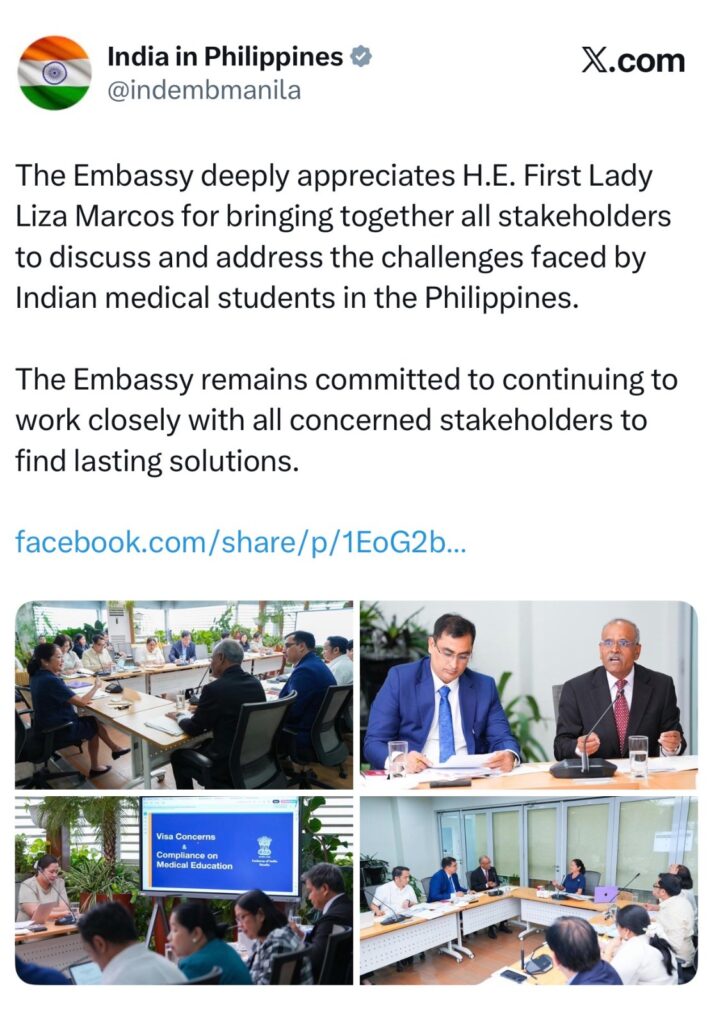
Following the meeting, the Indian Embassy in Manila issued a public statement expressing appreciation to the First Lady for bringing together all the relevant stakeholders to discuss and address the challenges Indian medical students face in the country. The Embassy further affirmed that it remains committed to continuing to work closely with all concerned stakeholders to find lasting solutions — language that suggests this is the start of an ongoing process rather than a one-off meeting.
It’s worth noting precisely what has — and hasn’t — been confirmed so far: no specific reform package, visa-rule amendment, or implementation timeline has been publicly announced yet. What has been confirmed is a clear, high-level commitment from both governments to keep working the problem together. For students and families tracking this closely, that distinction matters for setting realistic expectations.
Why Indian Students Choose the Philippines for MBBS in the First Place
The backdrop to this meeting is a genuine education-migration story worth understanding on its own terms.
Affordability. Total MBBS costs in the Philippines, including the pre-medical bridge program, typically run lower than private medical colleges in India and dramatically lower than universities in the US, UK, or Australia, with many estimates placing total tuition in the range of INR 15–25 lakh for the full program.
English-medium instruction. The Philippines is the third-largest English-speaking country in the world, and every medical program is taught entirely in English — removing the language barrier that complicates study in several other popular MBBS-abroad destinations.
Curriculum alignment with licensing exams. Philippine medical colleges generally follow an American-influenced education model, which has historically translated into comparatively strong outcomes for graduates sitting India’s Foreign Medical Graduate Examination (FMGE), now being phased toward the National Exit Test (NExT). Recent communication between CHEd and the Indian Embassy has also reaffirmed that the Philippine MD program structure — including its 54-month doctor-of-medicine course length and full English-medium delivery — aligns with the NMC’s regulatory schedule for foreign medical graduates.
Familiar academic environment. Class sizes, teaching styles, and even the broader cultural environment tend to feel closer to home for many Indian students than other study-abroad destinations, easing the adjustment process.
These structural advantages are exactly why a fix to the administrative friction points matters so much — the demand is already there; what has been missing is a smoother system to match it.
Industry Reaction: FICCI Pushes for Even Broader Reform
The Federation of Indian Chambers of Commerce (Philippines) Inc. (FICCI) welcomed the government’s intervention but argued the scope should not stop at medical students alone. The organization has pointed out that Indian students contribute meaningfully across the Philippine economy — not just within education, but also in housing, transportation, retail, and healthcare spending in university towns.
Among FICCI’s specific proposals is a shift toward issuing student visas valid for the full duration of an academic program, rather than requiring periodic renewals. The group argues that aligning visa validity with course length would meaningfully cut down on administrative burden and reduce processing delays for both students and the agencies managing them. This is a proposal worth watching closely, since it directly targets one of the most commonly cited pain points among current Indian MBBS students in the Philippines: the recurring cycle of visa renewal paperwork during a multi-year degree program.
What This Could Mean Going Forward
Based on what has been publicly confirmed so far, here is a realistic picture of where things stand:
- Confirmed: A direct, high-level dialogue now exists between the Office of the First Lady, the Indian Embassy, CHEd, and the Bureau of Immigration specifically focused on Indian medical students’ concerns.
- Confirmed: Both sides have publicly committed to continued collaboration toward “lasting solutions.”
- Proposed (not yet confirmed): Industry groups like FICCI are pushing for visas valid for a full academic program’s duration.
- Not yet announced: Any specific change to 9(f) visa rules, CEA processing timelines, or new coordination protocols between schools and government offices.
For current students, the practical takeaway is to continue following official advisories from the Indian Embassy in Manila and CHEd rather than acting on informal information, since any concrete changes will be communicated through those formal channels.
Frequently Asked Questions
Q: When did the meeting between the Philippines’ First Lady and the Indian Ambassador take place? A: The meeting was held on June 3, 2026, at the Office of the First Lady in Manila.
Q: Who represented India and the Philippines in this meeting? A: India was represented by Ambassador Harsh Kumar Jain. The Philippines was represented by First Lady Liza Araneta-Marcos, CHEd Chairperson Shirley Castañeda Agrupis, Bureau of Immigration Commissioner Joel Anthony Viado, and other government agency representatives.
Q: How many Indian students currently study medicine in the Philippines? A: Per the Indian Embassy in Manila, close to 9,000 Indian nationals were enrolled in pre-medicine and medicine programs as of 2024, with Indians forming the largest foreign student group in the country overall.
Q: Has the Philippines announced new visa rules for Indian medical students? A: Not yet. As of this meeting, no specific visa-rule changes have been formally announced. The meeting represents a commitment to work toward solutions, not a finalized policy change.
Q: What is the 9(f) visa and why does it matter for Indian MBBS students? A: The 9(f) is the Philippine student visa category required for foreign nationals enrolled in a Philippine academic program. For medicine and dentistry students, it must be paired with a Certificate of Eligibility for Admission (CEA) issued by CHEd — a dual requirement that this meeting specifically aimed to streamline.
Q: Does this meeting affect Indian students in other courses, not just medicine? A: The June 3 meeting was focused specifically on medical students. However, industry groups like FICCI have publicly called for similar reforms to be extended to Indian students across other academic disciplines.
Key Takeaways
This meeting marks a genuine, positive shift in how seriously the Philippine government is treating the concerns of its largest foreign student community. The direct involvement of the First Lady, the Indian Ambassador, the CHEd Chairperson, and the Bureau of Immigration Commissioner — all in one room, on one agenda — is not something Indian medical aspirants have seen before in this relationship. While no specific rule changes have been finalized yet, the tone, the seniority of participants, and the public commitments from both sides point toward a more student-friendly system on the horizon. For now, the soundest advice for Indian MBBS aspirants and their families is to stay closely tuned to official updates from the Indian Embassy in Manila and CHEd as this process develops.